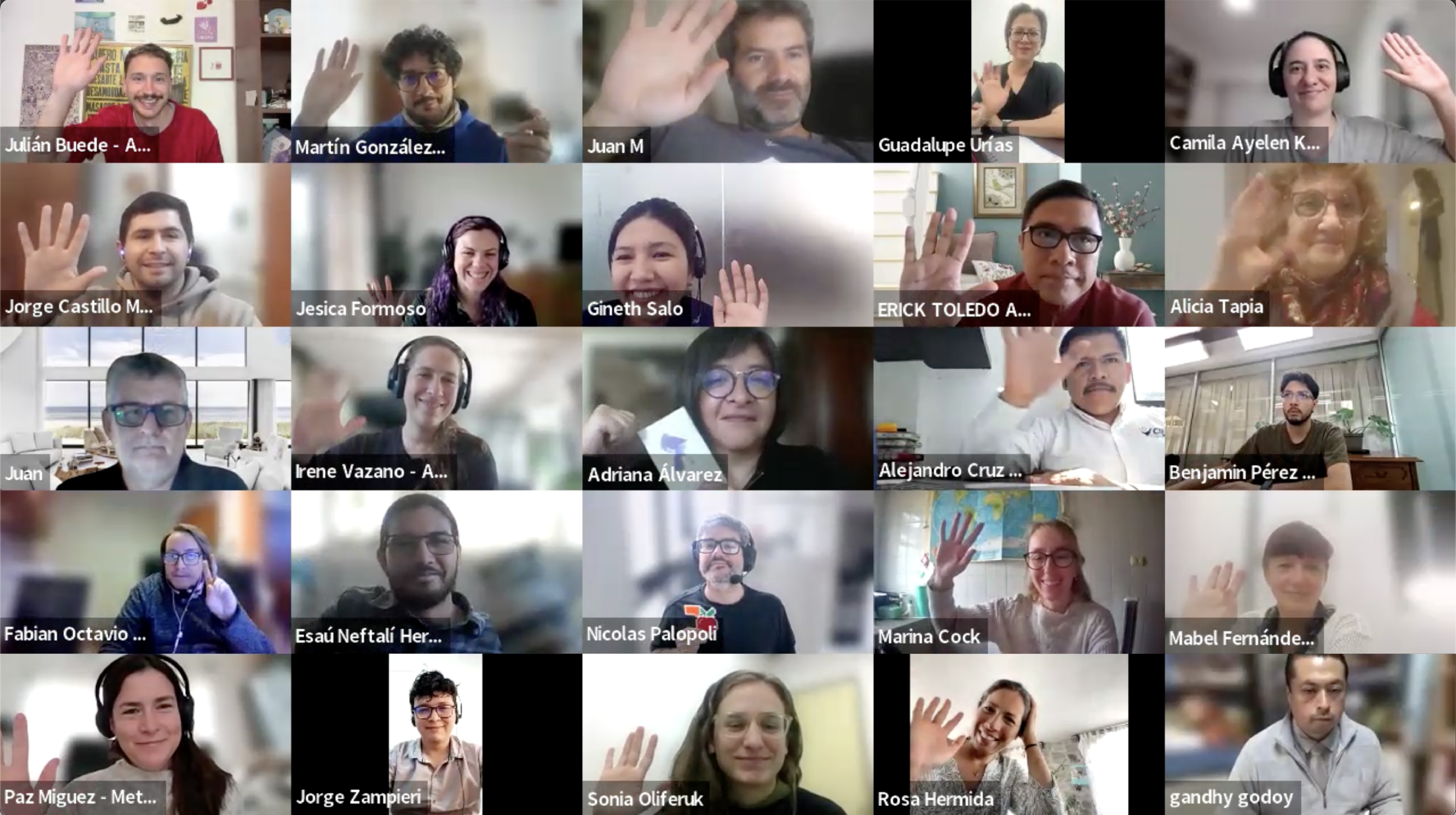
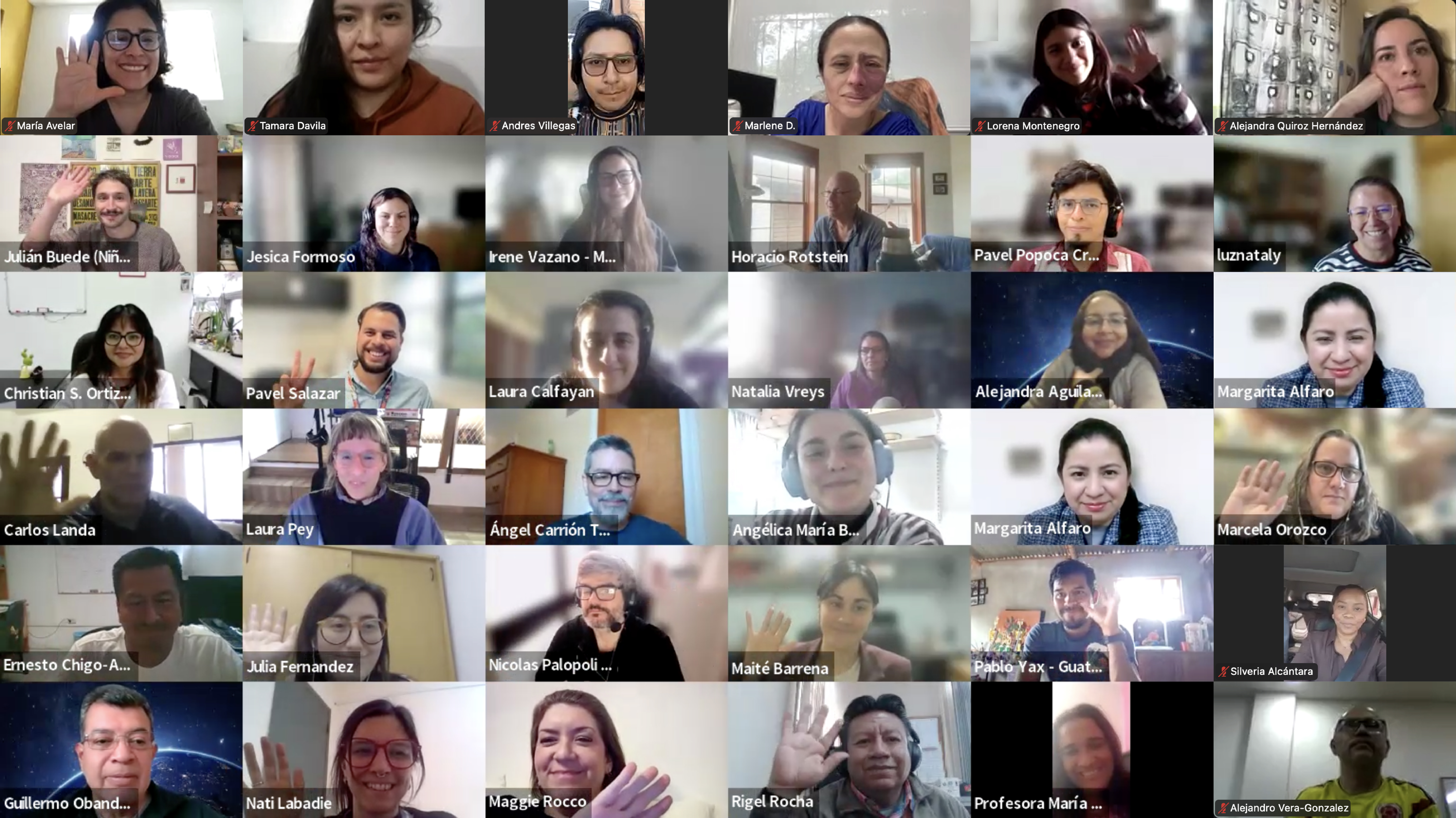
In the first half of 2026 we ran two editions of the course Herramientas de Ciencia Abierta. All 400 spots available were taken almost immediately and over 200 people attended the live meetings and completed the assessments required to earn their certification. In this post we look back at how the meetings unfolded and the resources that were shared and remain available for the wider community.
Background
Herramientas de Ciencia Abierta is part of our Open Science training work supported by NASA Open Science. It continues a path that began in 2024, when we contextualized NASA’s Open Science 101 course into Spanish and ran our first training cohorts. This new course revisited the updated content in a revamped format.
Herramientas de Ciencia Abierta was offered as a free, virtual, and synchronous course in Spanish. Beyond the live sessions, participants gained access to open resources, accessible bibliography, and a network of peers to sustain their work in their own projects, teams, or institutions.
Before each session we shared the roadmap for the meeting, the slides, the reference material, and the related bibliography, all available under an open license to read, adapt, and reuse. Each edition brought together people from different regions and disciplines who continue to stay in touch through our Slack after the course.
What is covered in the course
The course covers four topics, one per session. The roadmaps, with the contents and schedule of each module, are available on the course website.
The first session, Fundamentos de Ciencia Abierta (Open Science Fundamentals), is an introduction to the key concepts of Open Science. Small-group icebreaker activities encourage conversation among participants. Session 1 slides (in Spanish)
In the second session we review and reflect on what Open Data are and the benefits they bring. We introduce the Data Management Plan (DMP) and its importance, go over examples and key aspects of a DMP, and discuss metadata, licenses, and repositories for Open Science. Session 2 slides (in Spanish)
In the third session we discuss Open Source software, different tools to share the software openly, and how to manage that openness from the start with a Software Management Plan (SMP). We also cover good practices to make our code easy to find, accessible, and reusable. Session 3 slides (in Spanish)
The final session explors the different ways to publish Open Results. We share tools that help manage the openness of research projects and cover good practices for producing reports aligned with the FAIR principles. Session 4 slides (in Spanish)
What each edition left behind
The two editions confirmed our community’s interest in Open Science training: 400 spots filled, more than 200 people in the live meetings, and over 200 certified.
Some words from participants (originally shared in Spanish, translated here):
The best online course I've attended since the pandemic. You're the best.
Thank you for running this course. It especially makes me happy that you exist as a community. If anything transforms scientific practice for the better, it is largely by doing what you hold as your mission.
MetaDocencia offers online training, yes, but every course and every class is designed, thought through, and created so that those of us on the other side of the screen are a real part of the teaching and improvement process.
The conversation spaces to identify challenges, propose solutions, and build contacts offered a really enriching networking opportunity.
I came away with many resources and tips, and the chance to keep being part of this valuable community.
I want to highlight the entire MetaDocencia team for their dedication, support, and the care put into every detail.
Beyond the numbers, what remains is shared knowledge, a supportive community, and the infrastructure to keep working. The course materials (in Spanish) are still available openly in the workbench, with their roadmaps and references, under a CC BY 4.0 license: anyone can reuse them, in their original versions or with modifications, as long as they credit the original source of the materials. And the networks woven in each edition, supported by our Slack community, keep the exchange going after the last session.
You can learn more about this and other training projects in our projects section.
Did you like this post? You can freely reuse it under the CC BY 4.0 license; you just have to cite it.
This is the recommended citation to use for reference: Irene Vazano, Laura Ación, Jesica Formoso, Paz Míguez, Nicolás Palopoli, Julián Buede (2026). Herramientas de Ciencia Abierta: Two Editions in the First Half of 2026. Zenodo. https://doi.org/10.5281/zenodo.21648334